Setting Up Shopify Flow Automations Before Your Holiday Returns Surge
.JPG)
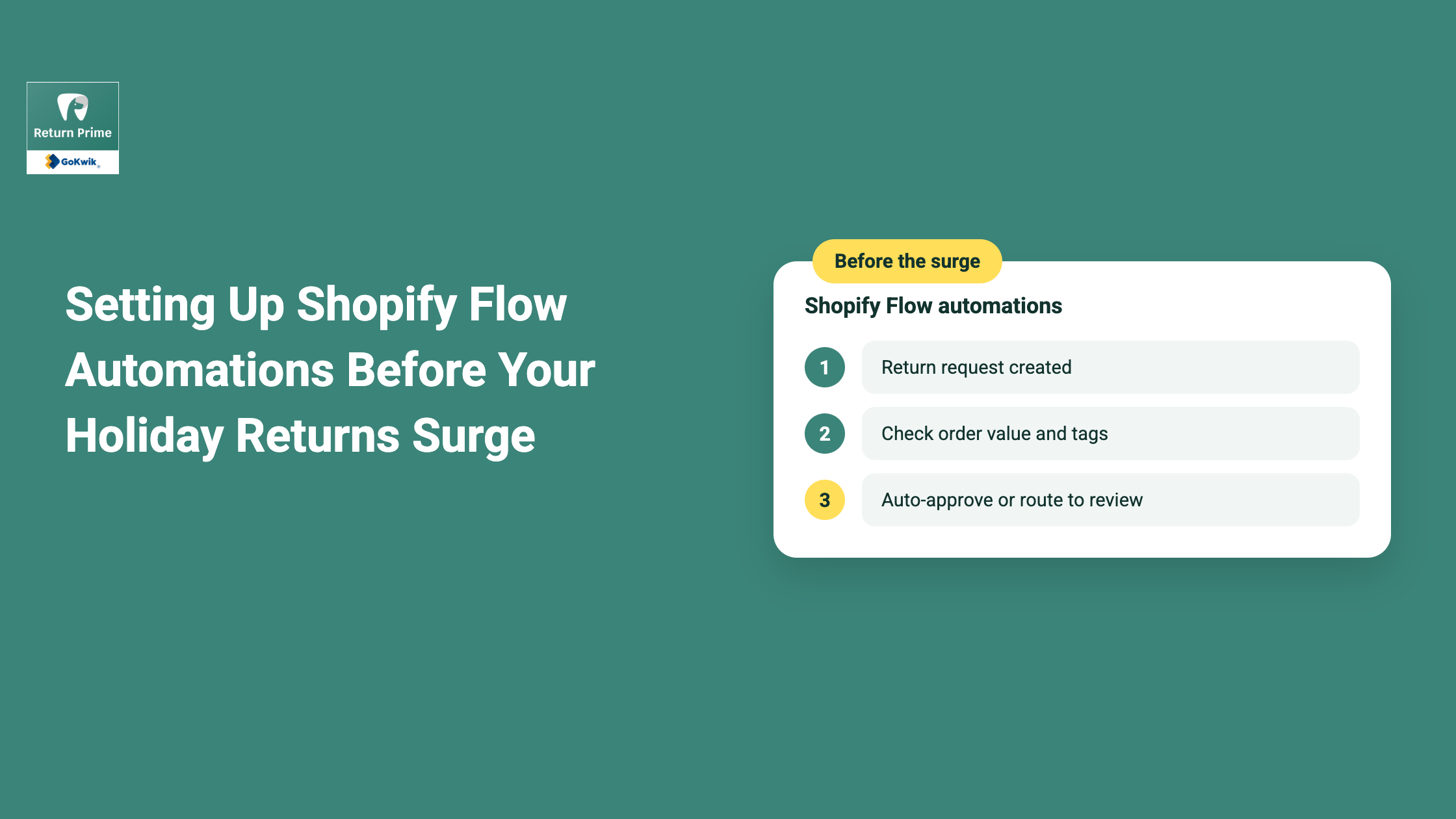
Shopify Flow lets merchants build custom automation logic across their store, and pairing it with your returns app closes gaps that neither tool handles well alone: Flow can react to store-wide events (tags, order properties, inventory levels) that a returns app doesn't natively see, while your returns app handles the return-specific workflow logic Flow wasn't built for.
Where Flow adds value on top of your returns app's native automation
Cross-system triggers your returns app can't see on its own. Flow can watch for conditions elsewhere in your store, a customer tag, an inventory threshold, a specific product collection, and use those to influence downstream return handling, connecting context your returns app wouldn't otherwise have visibility into.
Custom notification and tagging logic beyond standard templates. If you want a customer automatically tagged as "high-value holiday shopper" or "gift-return-initiated" based on a combination of conditions specific to your business, Flow can build that logic and pass the resulting context into how your returns process treats that order.
Coordination with inventory and fulfillment systems during peak volume. During your highest-volume weeks, Flow can help synchronize return-triggered actions (like flagging a returned item for restock versus write-off) with other systems in your Shopify setup that your returns app doesn't directly manage.
Practical Flow automations worth setting up before your surge hits
Auto-tag orders from known high-risk categories or promotional sources (a specific clearance collection, a specific ad campaign known to attract lower-intent buyers) so this context is available when a return request comes in later.
Trigger internal alerts for orders matching your defined risk criteria, as covered in our return-risk segmentation framework, routing them to a specific internal channel or queue rather than relying on someone noticing manually.
Automate gift-order flagging at the point of purchase, based on a gift-message field, gift-wrap selection, or shipping-address-differs-from-billing signal, so your gift returns flow has the context it needs before a return request even arrives.
Sync inventory restock or write-off decisions based on return reason, routing a "defective" return differently from a "changed my mind" return in terms of what happens to the physical inventory afterward.
Setting this up with enough lead time
Build and test these Flow automations well before your peak volume hits, not during it. A misconfigured Flow rule discovered mid-surge, incorrectly tagging every order as high-risk, for instance, creates more operational chaos than having no automation at all. Test with real order scenarios from a prior season if you have the data, or run a controlled test batch before fully relying on it for live festive volume.
How this connects to your returns app specifically
Flow handles the "if this happens elsewhere in my store, then do this" logic; your returns app, Wonder Bot Automation in Return Prime's case, handles the actual return-specific workflow: approval logic, exchange offers, refund triggers, and notifications. The two work best in combination, Flow feeding context and triggers into a returns process that then executes the actual resolution logic, rather than trying to build return-specific workflow logic inside Flow itself.
What good Flow-plus-returns-app setup looks like
A merchant that uses Flow to tag high-risk and gift-flagged orders automatically at the point of purchase, feeding that context into their returns app's own automation rules, rather than either relying on Flow alone for return workflow logic it wasn't built for, or ignoring the cross-system context Flow could be providing.
Install Return Prime from the Shopify App Store to pair your Shopify Flow automations with return-specific workflow logic built for exactly this use case.
FAQs
Do I need Shopify Flow if my returns app already has automation built in?
Not necessarily required, but it adds value specifically for cross-system context (tags, order properties, inventory signals) your returns app doesn't natively see, complementing rather than replacing your returns app's own workflow automation.
Is Shopify Flow available on all Shopify plans?
Availability varies by plan; check your current Shopify plan's feature access before building a strategy that depends on it.
How much lead time do I need to set this up before peak season?
Several weeks minimum, enough to build, test against realistic scenarios, and adjust before live volume depends on it working correctly.
Should I build return-specific approval logic directly in Flow instead of my returns app?
Generally no, your returns app is purpose-built for return-specific workflow logic; use Flow for the cross-system triggers and context-passing it's actually suited for.





.svg)


.svg)