Configuring Your Shopify Theme for Return Policy Visibility This Season

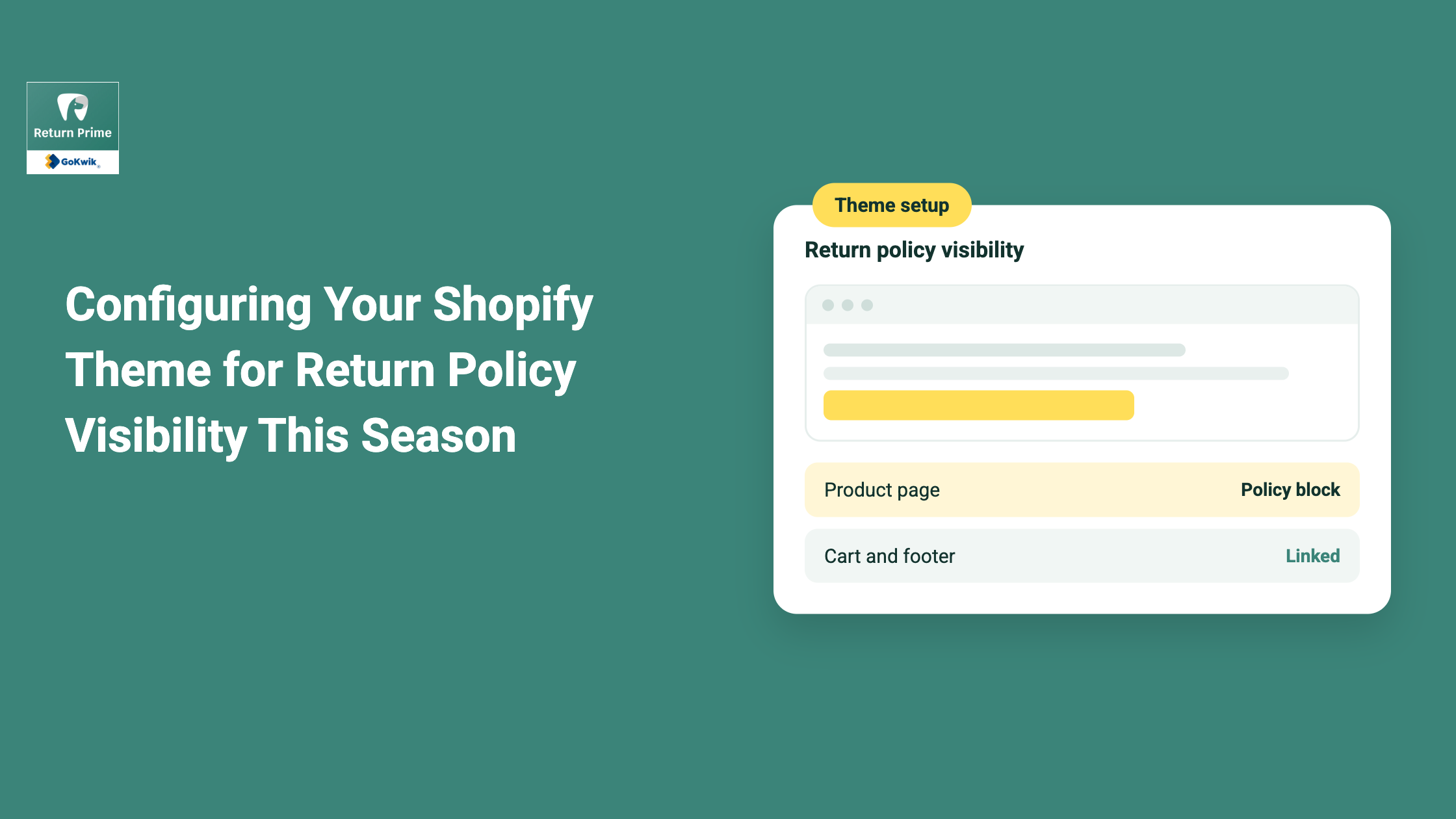
Return policy visibility directly affects checkout completion, current data puts the share of shoppers who check return policy before purchase at 67 to 81% depending on the survey, and merchants displaying terms prominently on product pages see measurably higher checkout completion than those burying the policy in a footer link. Yet most Shopify themes still treat return policy as an afterthought, tucked into a standalone page nobody visits before buying.
Where return policy visibility actually needs to live
On the product page itself, not just a linked policy page. A short, clear statement of the return window and basic terms directly on the product page, near the buy button, is what actually gets read before a purchase decision, not a link a shopper has to click away from checkout to find.
In the cart and checkout flow, as a reassurance point, not a distraction. A brief, visible reminder of your return terms at the point of highest purchase anxiety (the cart, right before checkout) reinforces confidence exactly when a shopper might be hesitating.
In post-purchase confirmation and shipping emails. Reinforcing return terms after purchase, not just before, reduces the "what's your return policy" support tickets that arrive days or weeks later when a customer has forgotten or never actually saw the original terms.
On collection and category pages for festive-specific collections, especially where your terms differ from your standard policy, as covered in our Diwali-specific return window guide and holiday returns playbook, since a shopper browsing a gift collection needs to see the gift-specific terms, not your general year-round policy.
Practical theme configuration steps
Add a return policy snippet block to your product template, most Shopify themes support a reusable content block or app block that can be placed near the add-to-cart button without requiring a full theme rebuild.
Use a trust-badge or icon-based visual treatment, not just plain text, since a scannable visual element (a return icon with a short phrase like "30-day easy returns") gets noticed faster than a sentence buried in body copy.
Configure distinct messaging for gift-specific or festive collections, if your theme supports collection-level content blocks, so seasonal policy differences are visible exactly where they're relevant, not only on a generic policy page that doesn't distinguish standard from festive terms.
Test how this renders on mobile specifically, given how much ecommerce traffic and purchasing now happens on mobile devices; a return policy element that displays well on desktop but gets pushed below the fold or hidden on mobile isn't actually solving the visibility problem for a large share of your traffic.
Why this matters more during festive season specifically
Given how much scrutiny return terms get during high-consideration festive purchases, and how often festive-specific terms genuinely differ from your standard policy, a theme configuration that surfaces the wrong (standard, non-festive) policy on a gift-collection page creates confusion and disputes exactly when clarity matters most.
What good implementation looks like
A merchant with a clear, icon-supported return policy statement on every product page, reinforced at cart and checkout, distinct and accurate messaging on festive-specific collections where terms genuinely differ, and confirmation that all of this renders correctly on mobile, tested before the season's traffic actually arrives.
How Return Prime connects to this
Return Prime's return policy configuration manages the actual policy logic and terms; pairing this with clear, prominent theme-level display of those terms (rather than leaving them only in the policy configuration's backend or a standalone linked page) is what actually gets the policy information in front of shoppers at the moment it affects their purchase decision.
Install Return Prime from the Shopify App Store to manage the return policy logic your theme's visible messaging should accurately reflect.
FAQs
Does adding return policy information to product pages actually require a developer?
Often not for basic implementation; many themes support this through built-in content blocks or simple app integrations, though more customized visual treatments may need theme code adjustments.
Should return policy messaging be identical across all product pages?
Not necessarily, if you run distinct festive or category-specific terms, that messaging should reflect the actual applicable policy for that specific page, not a generic statement that doesn't match.
How much detail should be shown on the product page versus the full policy page?
Keep the product-page snippet brief and scannable (window length, basic condition), linking through to your full policy page for complete detail, rather than trying to fit everything into the product page itself.
Does this really affect conversion, or just reduce disputes?
Current data links prominent return policy display specifically to higher checkout completion, suggesting it affects the purchase decision itself, not just post-purchase clarity.




.svg)


.svg)