Returns and Cash Flow: Managing Refund Timing Through the Holidays

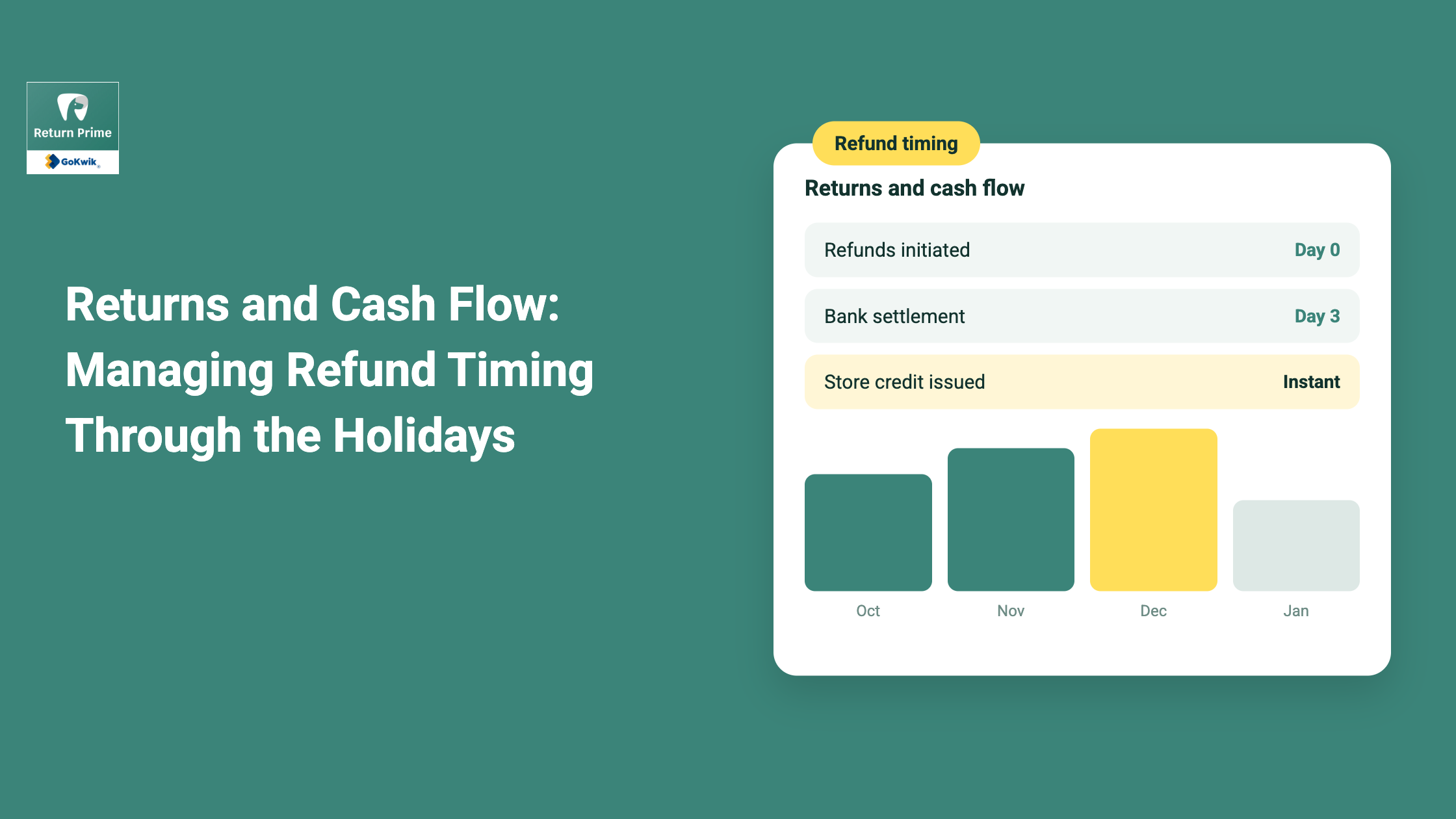
A refund isn't just a customer service outcome, it's a cash outflow, and the holiday season concentrates both your highest sales inflow and your highest eventual refund outflow into the same compressed few months. Merchants who plan sales cash flow carefully but treat refund timing as an afterthought often get an unpleasant surprise in January and February, when the delayed refund wave from November and December purchases actually lands.
Why refund timing deserves its own cash flow attention
The lag between sale and return means the cash outflow is delayed, not eliminated. A November sale that generates revenue this quarter may generate a refund in January or February, given the documented 10 to 12 week holiday return horizon, meaning the cash impact of holiday returns often lands in a different accounting period than the sales that caused them.
Payment processor refund timing adds a further delay on top of your own processing time. Even once you've approved a refund, the actual funds movement through your payment processor and back to the customer's account takes additional days, worth accounting for separately from your internal return-approval timeline.
Store credit shifts the cash flow picture differently than a cash refund. As covered in our store credit mechanics guide, store credit issued instead of a cash refund doesn't create an immediate cash outflow the way a refund does, it creates a future liability against inventory instead, which is a meaningfully different cash flow profile worth modeling separately.
What to actually plan for
Forecast expected refund liability alongside your sales forecast, not separately. Using the same return-volume forecasting approach covered elsewhere in this cluster, translate expected return volume into an expected refund-dollar timeline, mapped against when those refunds will actually process, not when the original sale occurred.
Build a cash reserve specifically sized against your forecasted refund liability, rather than assuming holiday season cash position is purely a function of sales revenue minus immediate costs. The delayed refund tail is a real, forecastable liability that deserves its own reserve planning.
Coordinate refund timing decisions with your actual cash position, where policy allows. As covered in our RTO refund timing guide, the specific trigger point for issuing a refund (on RTO confirmation versus physical receipt, for instance) has real cash flow timing implications worth understanding, not just customer-experience implications.
Watch the specific fiscal year-end boundary closely, as covered in our year-end clearance returns guide, since refunds processed right around your fiscal year-end can land in different accounting periods, worth flagging to your finance team specifically rather than only your operations team.
Model the cash flow difference between pushing store credit versus cash refunds at scale. Since store credit doesn't create the same immediate cash outflow, a successful store-credit-incentive strategy has a measurable, modelable cash flow benefit beyond its customer-retention value, worth quantifying for whoever manages your cash position.
What good refund cash flow planning looks like
A merchant that forecasts expected refund liability alongside sales forecasts, sizes cash reserves against that specific forecast rather than assuming holiday cash position is purely sales-driven, tracks the cash flow difference between refund and store-credit resolution paths, and flags fiscal year-end refund timing specifically to their finance team.
How Return Prime supports this
Return Prime's analytics provide the return volume and resolution-type data (refund versus exchange versus store credit) needed to build this forecast, while Wonder Bot Automation's configurable refund trigger timing lets you align the actual moment of cash outflow with your broader cash flow planning, rather than that timing being an unmanaged byproduct of whatever the default courier status trigger happens to be.
Install Return Prime from the Shopify App Store to get the return volume and resolution-type data your holiday cash flow forecast actually needs.
FAQs
How far in advance should I forecast refund liability?
As far ahead as your sales forecasting extends, since the refund liability from a given sales period trails it by weeks depending on the occasion and product category involved.
Does store credit really help cash flow, or just delay the same eventual cost?
It genuinely differs, store credit shifts the liability from an immediate cash outflow to a future discount against inventory, which is a meaningfully different cash flow profile even though it's not entirely cost-free.
Should refund trigger timing be decided based on cash flow, or customer experience?
Both matter; as covered in our RTO refund guide, customer experience generally favors triggering refunds as early as confidently possible, and understanding the resulting cash flow timing lets you plan around it rather than being caught off guard by it.
Is this really a returns-team responsibility, or should finance own it?
Both should be involved; the returns team has the volume and timing data, finance has the cash flow planning expertise, and the forecast is most useful when built collaboratively between the two.





.svg)


.svg)