eCommerce Return Policy Templates: Examples And Tips

Did you know that a well-crafted return and refund policy can protect your business’s bottom line while fostering customer trust? E-commerce businesses face unique challenges, from the high costs of parcel returns to increasing cases of policy abuse. Research indicates that UK retailers lose around $2.6 billion annually to fraudulent returns, forcing many to rethink their strategies.
Take ASOS, for example. The fashion giant recently introduced a £3.95 charge for customers with a "frequently high return rate" unless they keep at least £40 worth of goods. This innovative policy aims to tackle unsustainable return rates and reduce excessive returns' financial and environmental impact. By setting clear expectations and encouraging mindful shopping, ASOS demonstrates how businesses can use return policies to address challenges while maintaining customer satisfaction.
This example underscores the importance of designing a thoughtful return and refund policy that aligns with your business goals and values. In this article, we’ll explore practical tips and share real-world examples of return policy strategies to help you create a customer-friendly approach that safeguards your business. We will also talk about the eCommerce return policy template to help you get started.
What is an eCommerce Return Policy?
An eCommerce return policy is a set of guidelines that explains the conditions, timeframe, and process for returning or exchanging products purchased online. It helps set clear expectations for customers, builds trust, enhances satisfaction, and protects the business from fraudulent returns or unexpected financial losses.
By outlining eligibility, shipping responsibilities, and refund options, a well-crafted policy ensures a smooth and transparent experience for both the customer and the store.
Additional read: Understanding the RMA Return Process in E-Commerce
Importance of Defining Clear Return and Refund Policies
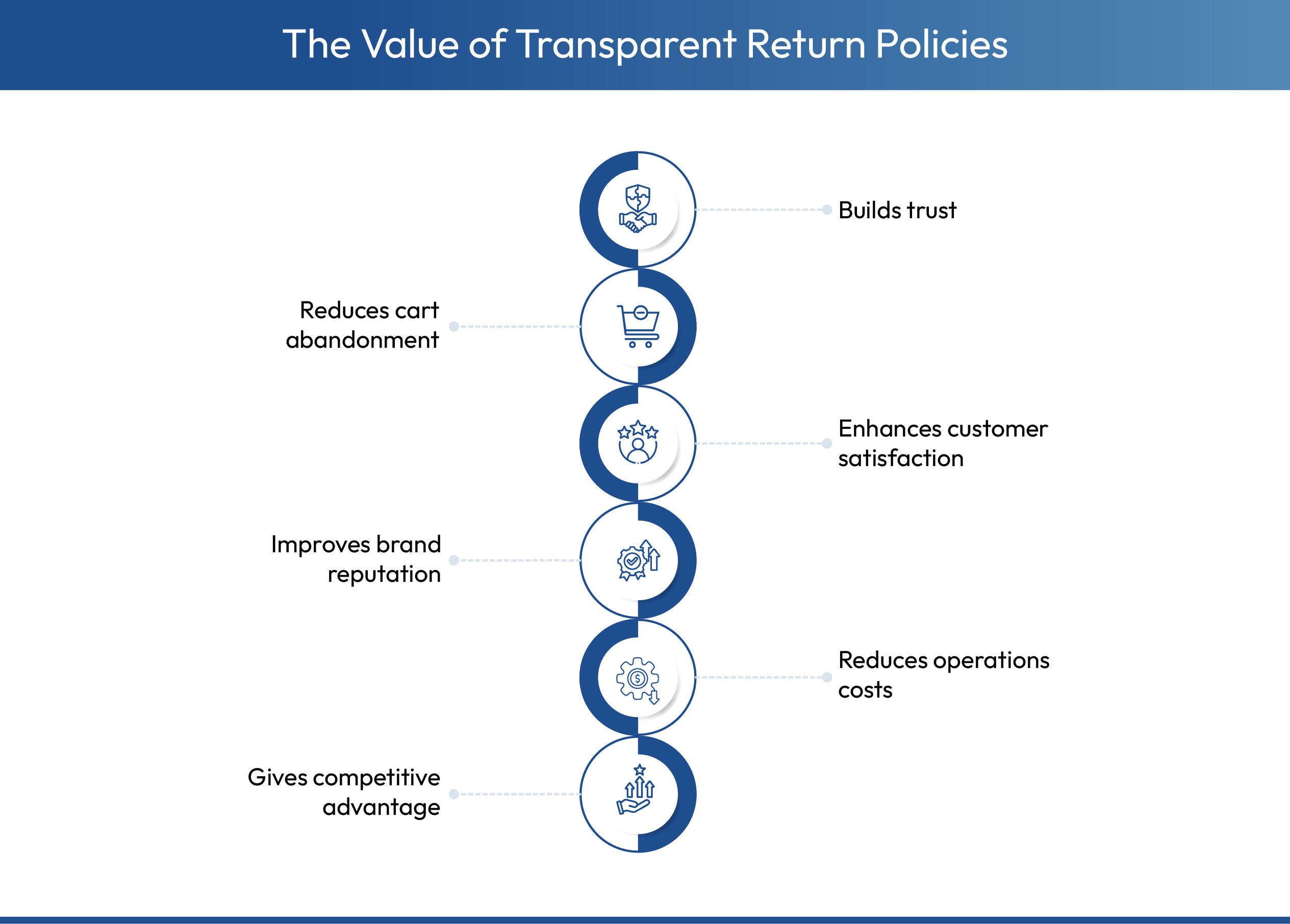
A return and refund policy is a set of guidelines that inform customers about how to return purchased products and receive refunds or exchanges. By setting clear expectations, these policies aim to clarify, build trust, and ensure satisfaction. An effective return policy can reduce disputes and foster customer loyalty. Here are its benefits:
- Builds Trust and Confidence: Customers are more likely to purchase from businesses with clear and customer-friendly return policies.
- Reduces Cart Abandonment: A generous return policy alleviates customer concerns about potential issues, leading to more completed purchases.
- Enhances Customer Satisfaction: Smooth and efficient returns lead to happier customers and a more positive overall shopping experience.
- Improves Brand Reputation: Positive return experiences foster customer loyalty and encourage positive word-of-mouth referrals.
- Reduces Operational Costs: Streamlined returns minimise handling time and reduce the overall cost of returns.
- Creates a Competitive Advantage: A strong return policy differentiates your business and attracts customers who value convenience and flexibility.
By focusing on positive experiences, you set your business up for success. Next, we will explore the differences between return and refund policies.
Key Differences Between Return and Refund Policies
While these terms are often used interchangeably, return and refund policies serve distinct purposes:
Now, let’s understand the essential components of an effective return and refund policy.
Key Components of a Return and Refund Policy
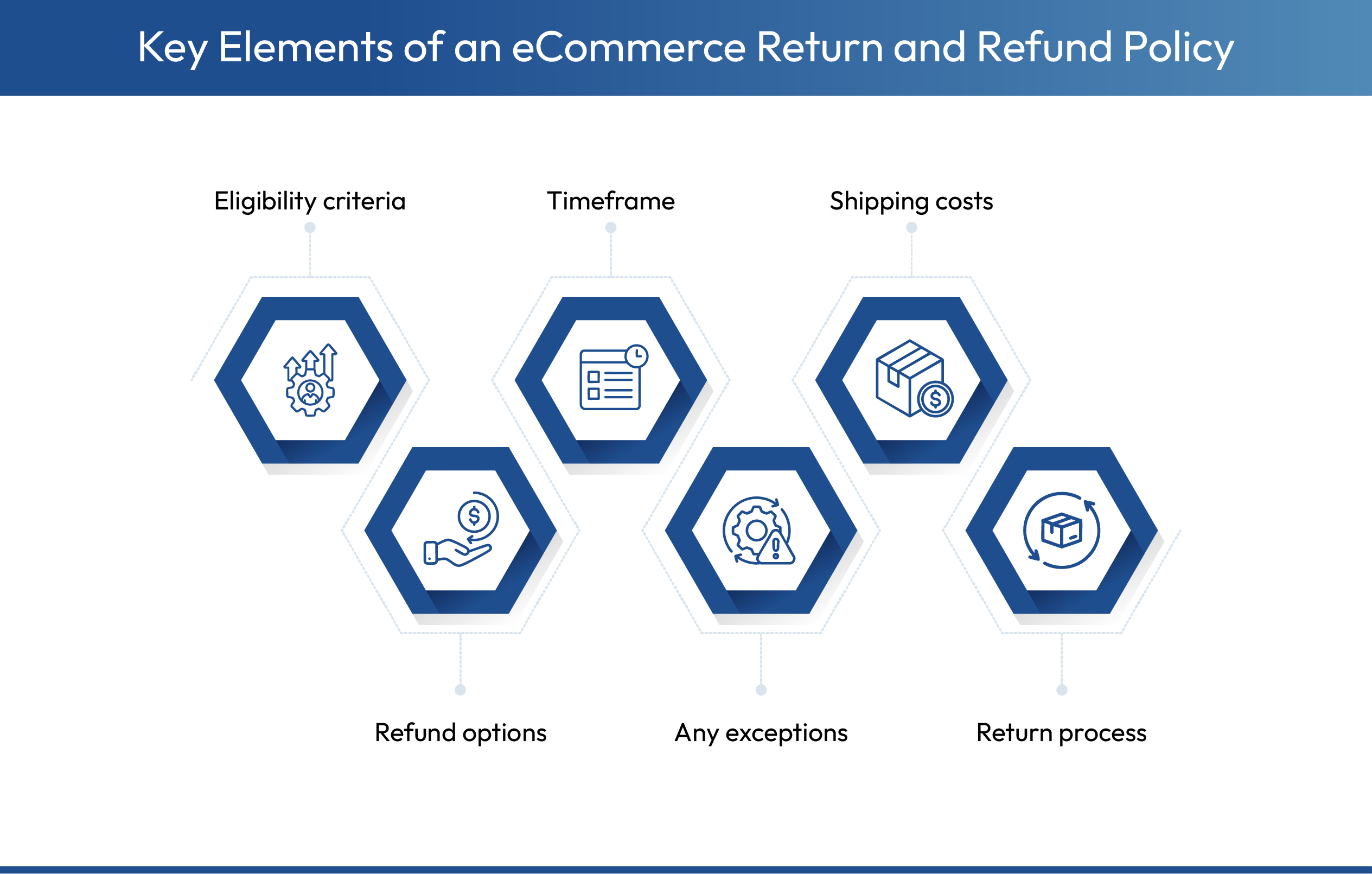
A strong return and refund policy should include these six essential components to ensure clarity and customer satisfaction:
- Eligibility for Returns: Clearly outline the conditions under which returns are accepted, such as time limits (e.g., within 30 days of purchase) and the condition of the product (e.g., unused, with original packaging).
- Refund Options: Specify the types of refunds available, such as cash refunds, store credit, or product exchanges.
- Timeframe for Refund Processing: Indicate how long it will take to process the refund after a return is approved.
- Exclusions: Detail any products or situations that are not eligible for returns or refunds, such as clearance items or custom-made goods.
- Return Shipping Costs: State whether customers are responsible for covering return shipping fees or if the business provides prepaid shipping labels.
- Return Procedure: Provide clear instructions on how customers can initiate and complete a return, including required documents or steps, such as contacting customer support or using a specific return portal.
Businesses can create a policy that balances customer needs with operational efficiency by addressing these critical areas.
Suggested read: Calculating Shopify Product Return Rate: Best Practices
Now, let’s shift gears to creating a customer-centric return policy.
Crafting a Customer-Centric Return Policy
A customer-centric return policy is essential in e-commerce to build trust and loyalty. Here are some key principles to guide your return policy development:
- Put Yourself in the Customer’s Shoes: Design your return policy to be clear, simple, and convenient, so customers can easily understand and use it.
- Offer Flexibility and Choice: Give customers multiple return methods, extended return windows, and a variety of refund or exchange options.
- Emphasize Customer Service: Make your policy easy to find, provide professional support, and train staff to handle returns efficiently.
- Consider Sustainability: Encourage eco-friendly returns and implement repair or refurbishment programs to reduce waste.
- Review and Update Regularly: Continuously update your policy based on customer feedback, industry trends, and changing legal requirements.
Crafting a strong return policy is just the first step. With Return Prime, you can build custom return and exchange policies tailored to your business needs. Create rules that ensure transparency while offering a smooth customer experience. Start customizing your policies today and improve your store’s return management!
Let’s explore some common questions to be addressed while framing a return policy.
Common Questions to Answer in Your Return Policy
Creating a clear and comprehensive return policy is essential for building customer trust and ensuring a positive shopping experience. To help you craft an effective policy, here are some common questions that should be addressed to clarify and reassure your customers.
By answering these questions in your return policy, you can set clear expectations, enhance customer satisfaction, and minimize confusion about returns and refunds.
Also Read: Creating a Return Shipping Label for Customer Returns on Shopify
eCommerce Return Policy Template Example
A clear and well-structured eCommerce return policy template helps your customers feel confident when shopping online. Templates provide a framework to make these policies easy to understand and customer-friendly, outlining the rules for returns while protecting your business.
Key Components of an Effective Template
- Return Window: Specify the number of days customers have to make a return, commonly 14–30 days after delivery.
- Item Conditions: Items should be returned unused, in original packaging, with tags intact, and accompanied by proof of purchase.
- Return Process: Offer a clear, step-by-step procedure for returning items, whether through email requests, online forms, or label generation.
- Refund Options: Provide customers the choice of full refund, store credit, or an exchange.
- Shipping Responsibilities: Clearly state whether the return shipping cost is covered by your store or the customer.
- Exclusions: Identify items that cannot be returned, such as final sale, personalized, or perishable products.
- Processing Time: Indicate how long refunds or exchanges take after items are received, typically 7–14 days.
eCommerce Return Policy Template
Returns & Refunds Policy for [Your Store Name]
We want you to love your purchase! If for any reason you’re not completely satisfied, eligible items can be returned within 30 days of delivery for a refund, exchange, or store credit.
Eligibility
- Items must be unused and returned in their original packaging.
- All tags, accessories, and manuals must be included.
- A valid proof of purchase (order number or receipt) is required.
How to Return
- Email us at [Your Email] or submit a request through our returns portal with your order number.
- We’ll provide a prepaid shipping label if your return is eligible.
- Pack your items securely in the original packaging and attach the shipping label.
- Drop off at the designated carrier or schedule a pickup.
Important: Do not send items directly to the manufacturer.
Refunds & Exchanges
- Once your return is received and inspected, we’ll process your refund, exchange, or store credit within 7–14 business days.
- Refunds go back to the original payment method unless you select an exchange or store credit.
- Items returned in damaged or incomplete condition may be eligible for a partial refund.
Shipping Costs
- Free Returns: We cover return shipping for eligible items.
- Customer-Paid Returns: You are responsible for the shipping cost.
- Deducted Cost: Shipping fees may be deducted from the refund amount.
Non-Returnable Items
- Final sale items
- Custom or personalized products
- Digital downloads
- Perishable items (e.g., food, flowers)
- [Add any store-specific exclusions]
Questions?
For assistance with returns or refunds, contact our customer service team:
- Email: [Customer Service Email]
- Phone: [Customer Service Phone]
- Live Chat: [Optional Link]
Tips for Implementing a Return Policy Effectively
To effectively implement your return policy and maximize its benefits, consider these key strategies:
- Optimize visibility: Place return policy links on product pages, checkout screens, and order confirmation emails, and include an “Easy Returns” section in FAQs.
- Communicate widely: Share your policy via email, chatbots, customer service scripts, and social media to keep customers informed.
- Adapt for seasons and promotions: Offer extended return windows during holidays or special sales to improve convenience.
- Update regularly: Monitor customer feedback and legal changes to revise your policy and keep it relevant.
Creating a Return Management System
When writing a return and refund policy, a well-structured Return Management System (RMS) is crucial in bringing your policy to life. Here's how you can incorporate and implement an RMS to support your return policy effectively:
- Define goals and objectives: Clearly outline your RMS goals to reduce return rates, improve customer satisfaction, minimize costs, and gain insights from returns data to refine products and operations.
- Choose the right technology: Select an RMS that fits your business needs, whether standalone or integrated with your e-commerce platform, and includes features like RMA generation, inventory tracking, shipping labels, reporting, and a customer portal.
- Streamline the return process: Ensure a simple, efficient process for customers by providing a portal to initiate returns, generate RMA numbers, track returns, and communicate your policy clearly on websites, emails, and packaging.
- Provide excellent customer support: Support your RMS with dedicated channels, well-trained staff, and proactive updates via email or SMS to keep customers informed and confident throughout the return process.
- Utilize data for continuous improvement: Track return metrics, analyze trends and root causes, and use insights to refine your return policy, enhance product quality, and improve the overall customer experience.
- Foster a culture of continuous improvement: Regularly review and optimize your RMS, stay updated on trends and technologies, and actively collect customer feedback to ensure your return process evolves with customer needs.
Let’s now look at real-world examples of return policy.
Examples of Return Policy
Effective return policies are essential for enhancing customer satisfaction and loyalty. Here’s a concise overview of the examples:
1. Gentlewench - Clear Criteria and Exclusions
Gentlewench is a women's fashion and homeware brand that offers a unique blend of refined and vibrant designs. The company ensures clarity in its return policy to enhance customer confidence.
Why its return policies are effective:
- Transparency: A detailed list of non-returnable items, such as intimate apparel, helps customers understand their options and reduces confusion.
- Defined Process: Clear steps for initiating returns guide customers, enhancing their experience and building trust.
- Quality Control: Strict return conditions maintain product quality for resale, protecting the brand's reputation.
2. The Kind Pen - No Restocking Fee, Quick Processing
The Kind Pen operates in vape manufacturing, specializing in dry herb vaporizers and accessories. It distinguishes itself with a customer-friendly return policy that eliminates restocking fees and offers quick refunds.
Why its return policies are effective:
- Customer-Centric: Eliminating restocking fees encourages purchases without the fear of penalties.
- Fast Refunds: Processing refunds within five business days shows respect for customers' time and fosters satisfaction.
- Clear Instructions: The return merchandise authorization (RMA) requirement simplifies the return process.
3. The Antique Jewellery Company - Detailed International Returns
The Antique Jewellery Company based in the UK is part of the antique jewelry market, where it excels by offering detailed international return guidelines. It caters to collectors and investors who appreciate unique pieces' historical value and craftsmanship.
Why its return policies are effective:
- Global Accessibility: Comprehensive international return guidelines cater to a diverse customer base, addressing cross-border complexities.
- Currency Support: Acknowledging currency fluctuations builds trust with international customers.
- Clarity and Specificity: Detailed policies prevent misunderstandings about returns, ensuring a smooth process for global customers.
Effective return policies prioritize clarity, convenience, and efficiency. Businesses can significantly enhance customer loyalty and satisfaction by addressing customer needs and streamlining processes.
What Are eCommerce Returns Best Practices?
Effective eCommerce return practices balance customer satisfaction with operational efficiency. When done well, they build trust, reduce friction, and can even increase repeat purchases.
- Clear and Accessible Policy: Make your return rules easy to find and understand, including the return window, item conditions, and options like refunds, exchanges, or store credit.
- Transparent Communication: Be upfront about costs, eligibility, and expectations to build trust and reduce confusion. Send automated updates throughout the return process.
- Convenient Return Options: Offer multiple channels, such as online self-service portals, prepaid shipping labels, drop-off points, or in-store returns.
- Encourage Exchanges: Promote exchanges over refunds to retain revenue and keep customers engaged.
- Enhance Product Information: Provide accurate descriptions, sizing guides, and high-quality images to reduce unnecessary returns.
- Use Data to Improve: Track return reasons, processing times, and customer feedback to identify trends and optimize your products and processes.
Let’s discover how Return Prime can help you out with your return and refund policies.
How Return Prime Can Help You Build a Better Return Policy
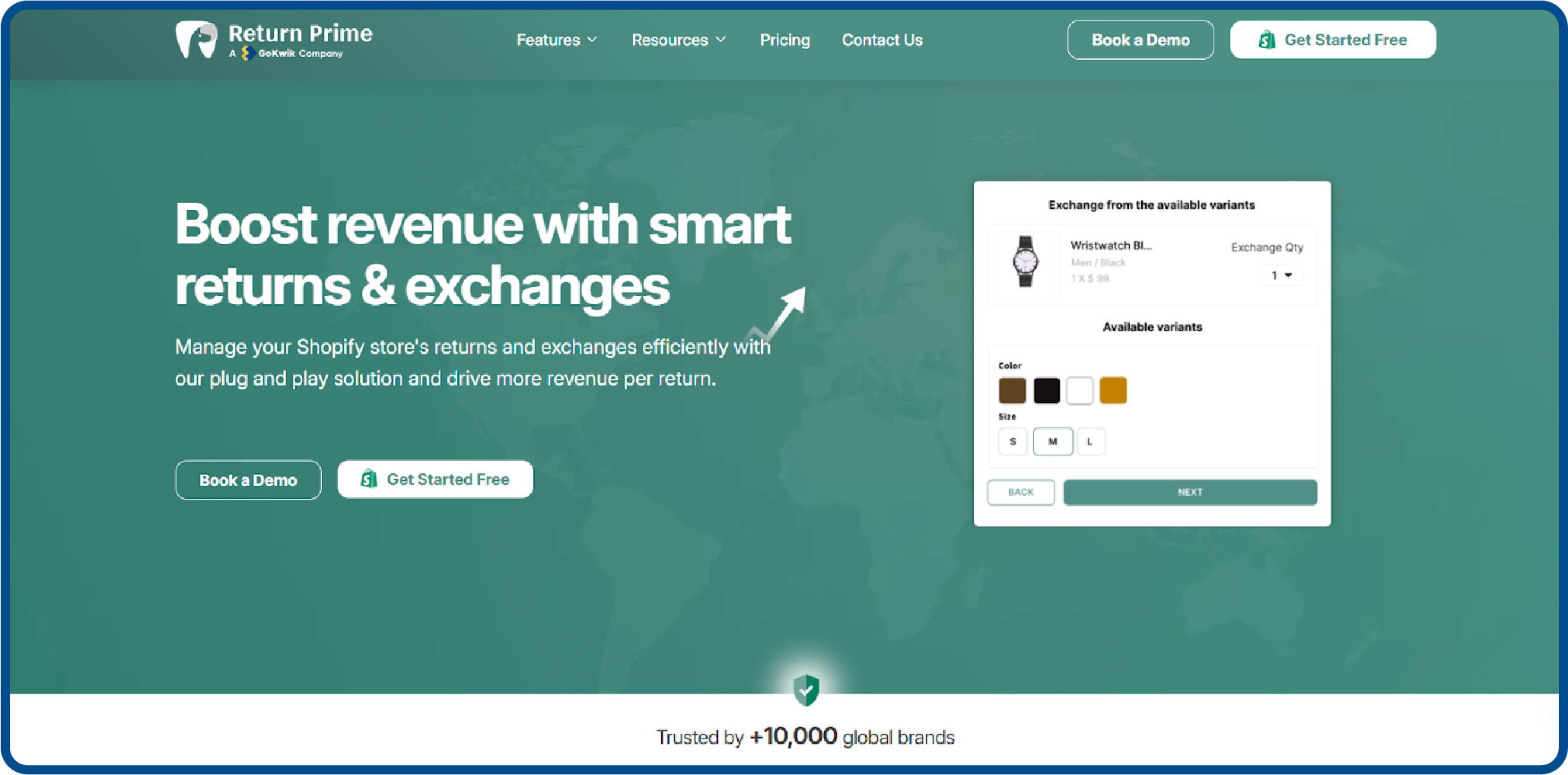
Managing returns, exchanges, and refunds doesn’t have to be a headache—Return Prime is here to make it simple! Designed specifically for Shopify stores, this return management platform helps you build trust and keep your customers happy with an easy-to-use solution for handling returns.
Return Prime lets you manage returns, exchanges, and refunds from a single dashboard. No more juggling tools or losing track of requests—it’s easy for your team and customers to stay on top of every return. Here's how it can make a difference:
- Turn Returns into Revenue: Return Prime helps you turn returns into upsell opportunities by allowing you to suggest new products during the return process, encourage exchanges instead of refunds, and offer store credit, keeping customers engaged and boosting sales.
- Customizable Return and Exchange Policies: You can design return and exchange rules that match your business needs, setting clear and transparent guidelines. This ensures a smooth, hassle-free experience for both your team and your customers on Shopify.
- Save Time with Automation: Automated notifications, approvals, and return processing reduce manual work and errors, helping your team manage returns quickly and efficiently while keeping customers informed throughout the process.
- Get Data-Driven Insights: Return Prime provides analytics on return trends, customer behavior, and overall performance, giving you actionable insights to refine your return policies and enhance the overall customer experience.
- Built with Your Customers in Mind: The platform focuses on a seamless experience for customers, offering user-friendly return portals and hassle-free shipping label generation to make returns easy, fast, and stress-free.
- Trusted by Thousands: With over 10,000 global Shopify stores using Return Prime, it’s a reliable solution for both new and scaling businesses, simplifying returns management and ensuring a professional, consistent process every time.
Make returns a breeze- for your customers and your business- with Return Prime!
Conclusion
A strong and well-crafted return and refund policy is vital for your e-commerce success. Learning about examples of return policy helps you craft clear and effective guidelines. Clear guidelines enhance customer satisfaction, ensure legal compliance, and reduce disputes.
By following customer-centric approaches and leveraging tools like Return Prime, your Shopify store can streamline return management, improve satisfaction, and boost revenue. Invest in an effective return policy today to foster customer loyalty and drive business growth.
Are you having trouble keeping up with return and refund policies? Return Prime simplifies the process, making it easier for you and your customers. Book a demo today to see how it works.
Frequently Asked Questions
What is an example of a good return policy?
A good return policy is clear, easy to find, and customer-friendly. It specifies the return timeframe, item conditions, acceptable refund or exchange options, shipping responsibilities, and exclusions, helping build trust and reduce confusion for online shoppers.
What's the Big 5 return policy?
The Big 5 return policy refers to five key elements: clear timeframe, item eligibility and condition, return process, refund or exchange options, and shipping responsibilities. Together, these components make returns transparent, consistent, and customer-friendly for online businesses.
How to make a return and refund policy?
To make a return and refund policy, define the timeframe, conditions for returns, process for requesting returns, refund or exchange options, and shipping responsibilities. Ensure it’s easy to read, accessible, and communicated clearly on your website.
What are the must-have ideas for a refund policy?
A must-have refund policy should include a clear return timeframe, eligibility requirements, step-by-step instructions, refund or exchange options, shipping cost details, and non-returnable items. Transparency and simplicity ensure customer trust and reduce disputes or confusion.



.png)
.png)


.svg)


.svg)