Indian Wedding Season Returns (Nov–Feb): A Guide for Fashion and Jewelry Brands

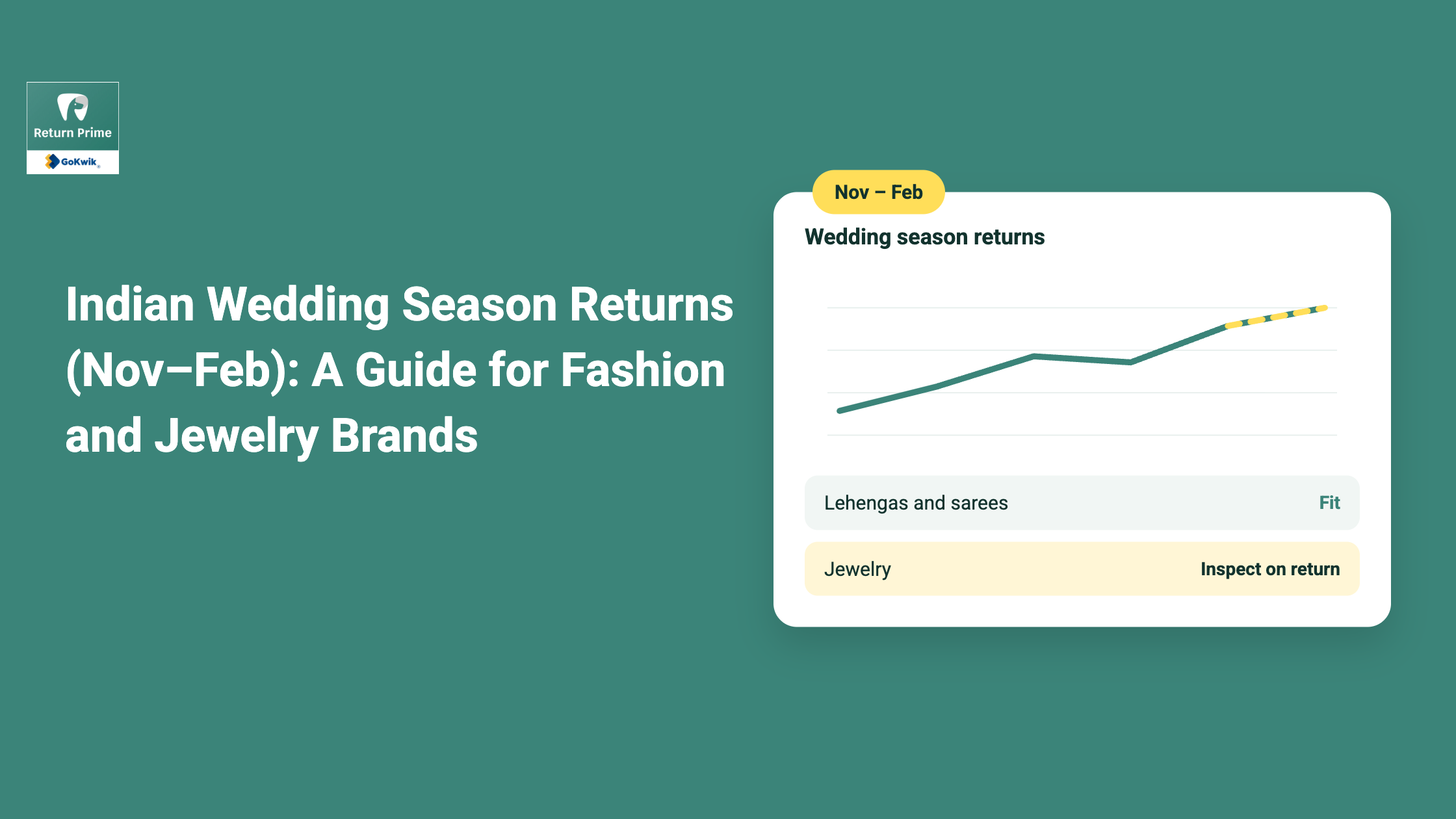
India's wedding season, concentrated from late November through February, represents an estimated ₹4.25 lakh crore ($51 billion) opportunity across jewelry, apparel, and gifting categories, with the Retailers Association of India projecting 8 to 11% sales growth in jewelry, garments, footwear, and designer clothing specifically during this window. For Shopify brands in these categories, wedding season isn't a bonus sales bump, it's often the single largest revenue period of the year, and it comes with a returns profile unlike any other season.
Why wedding season returns are structurally different
Purchases are high-consideration and high-value, but decided under real time pressure. Wedding shopping involves genuine deliberation, fabric, fit, color coordination across a bridal party, but is also frequently rushed against a fixed, non-negotiable date. This combination produces a specific failure mode: careful buyers making decisions faster than they'd like, which elevates the odds of a fit or color-match issue surfacing after purchase.
Multiple family members often order coordinated outfits in a single purchase window. A single wedding can generate dozens of linked orders (bride, groom, extended family, wedding party) often placed across different times but needing to arrive and fit correctly by the same fixed date. A return or exchange delay on any one of these orders has outsized impact, since the deadline doesn't move for a slow exchange cycle.
Jewelry-specific risk mirrors Dhanteras, at even higher stakes. Wedding jewelry purchases are typically higher value than a typical Dhanteras purchase, and often involve customization, sizing, and certification requirements that a standard return flow isn't built to handle without a distinct, higher-scrutiny path.
The date is fixed and known in advance, which is actually an advantage if you use it. Unlike a generic gifting occasion with fuzzy timing, most wedding-related purchases have a specific, known event date. This means return and exchange windows can, and should, be built around that stated date rather than a generic fixed number of days from purchase.
What to actually build for this season
A date-aware return and exchange window, not a fixed generic one. If your checkout or order process can capture an event date for wedding-category purchases, use it to calculate a realistic, need-it-fixed-before-the-date exchange window, similar in logic to the Halloween deadline problem but running over months instead of weeks.
A high-touch, priority path for jewelry and high-value items specifically. As covered in our Dhanteras readiness guide, high-value categories warrant manual review and faster resolution than standard auto-approval thresholds, and wedding-season jewelry purchases are frequently even higher value than typical Dhanteras purchases.
Fast exchange turnaround as the actual product, not just a policy nicety. Given fixed wedding dates, the speed of an exchange matters as much as the policy terms themselves. A generous return window with a slow fulfillment process still fails a customer whose wedding is in nine days.
Clear coordination handling for multi-order, multi-person purchases. If your systems can link related orders (same wedding, different family members), prioritizing and tracking them together helps avoid the scenario where one family member's exchange slips through the cracks while the rest of the coordinated outfits are ready.
Where this connects to your broader festive calendar
Wedding season overlaps directly with Diwali, since most Indian weddings occur between the end of Diwali and the first few months of the new year. A fashion or jewelry brand needs both readiness plans running simultaneously, not sequentially, given how much the two seasons overlap on the calendar.
How Return Prime supports this
Return Prime's category and value-based policy configuration supports the distinct, priority handling wedding-season jewelry and fashion purchases need, while Wonder Smart Exchange defaults to fast exchange resolution over a slower refund cycle, directly relevant given how date-sensitive this category's purchases are.
Install Return Prime from the Shopify App Store to set up date-aware, exchange-first handling for your wedding-season jewelry and fashion returns.
FAQs
Should I ask customers for their wedding date at checkout?
Worth considering for wedding-category collections specifically, since it lets you calculate a realistic, deadline-aware exchange window rather than applying a generic fixed policy that may not fit the customer's actual timeline.
Is wedding-season jewelry return handling different from Dhanteras?
Similar underlying logic (high value, exchange-first, manual review thresholds), though wedding-season purchases often involve customization and even higher average value, warranting an equally attentive but distinctly configured path.
How do I handle multiple linked orders for the same wedding?
If your systems support order tagging or grouping, use it to track and prioritize related orders together, so a delay on one doesn't get lost relative to the others.
Does this overlap with Diwali readiness, or is it separate?
It overlaps significantly on the calendar, most Indian weddings occur between Diwali and February, so both readiness plans need to run concurrently, not as separate, sequential efforts.
Sources referenced for this post: Retailers Association of India wedding-season spending projections (via Deccan Herald/Reuters), and Unicommerce's fashion RTO data for the Indian ecommerce fashion sector (via First Resort research, 2026).





.svg)


.svg)