Year-End Clearance Sale Returns: A December Shopify Playbook

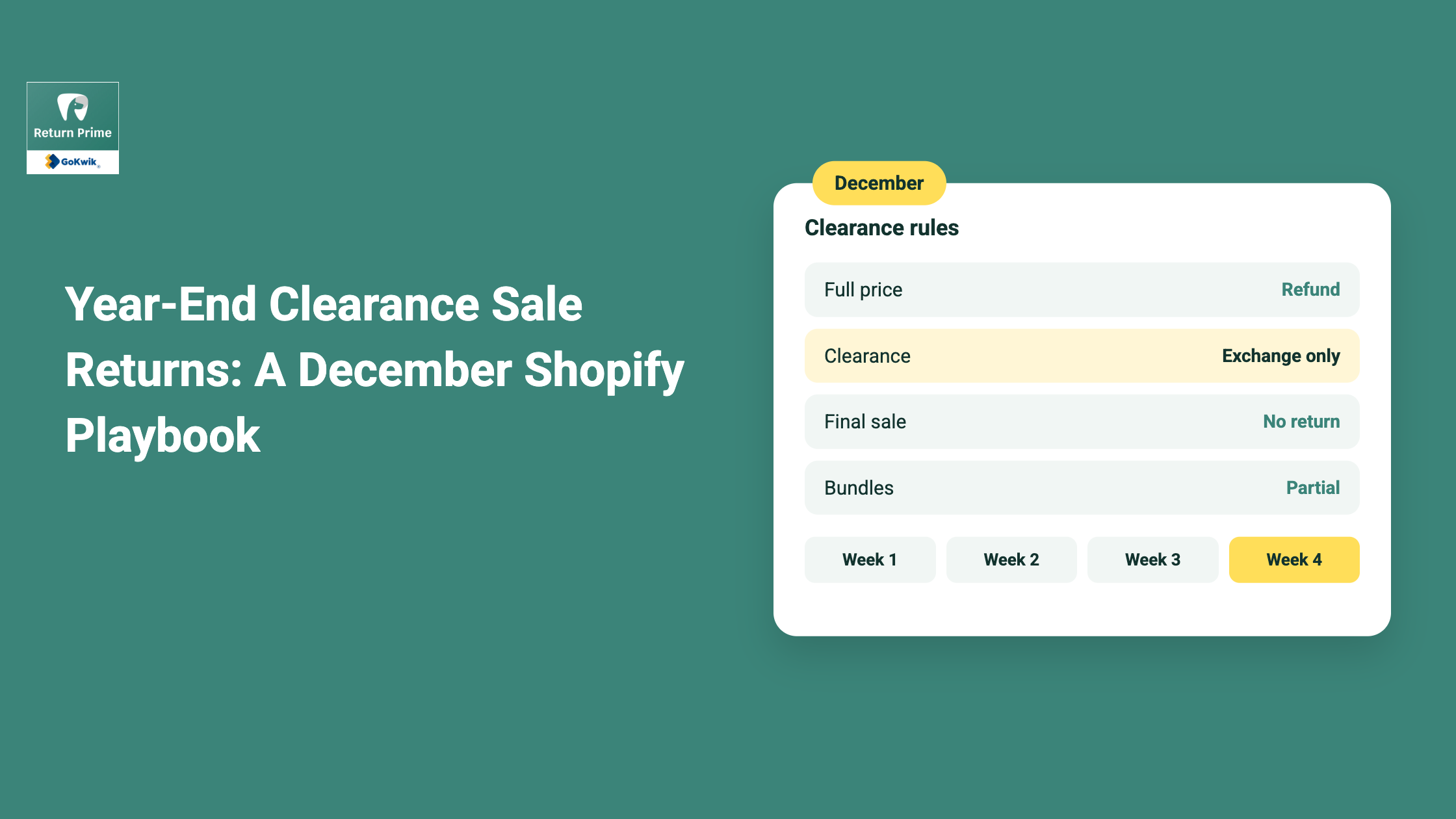
December's year-end clearance push overlaps directly with your busiest gift-return period, creating a specific operational tension: you're trying to move remaining inventory fast, deeply discounted, while simultaneously processing the largest gift-return and exchange volume of the year. Treating both as one undifferentiated "December returns" problem misses how differently each needs to be handled.
Why year-end clearance returns need their own lens
Inventory being cleared often isn't coming back next season. Unlike a mid-year sale on ongoing catalog items, year-end clearance frequently involves discontinued lines, last season's colors, or stock you specifically don't want to restock and recarry. A return on this specific inventory has a different, often worse, economic outcome than a return on an item you'll simply put back on the shelf.
Clearance shoppers are buying opportunistically, often for gifting. December clearance sits inside the gift-buying window too, meaning a share of clearance purchases are gifts, subject to the same gift-return mechanics covered in our gift returns flow guide, on top of the deep-discount return-rate elevation covered in our EOSS returns guide.
Year-end is also when merchants are closing annual books. Return and refund timing has real accounting implications at year-end specifically, a refund processed December 31st versus January 2nd can land in different fiscal periods, which matters more at this specific point in the calendar than during a mid-year sale.
What to actually do
Tag year-end clearance inventory distinctly in your returns system, separate from both your standard catalog and your general holiday gift inventory, so policy and economics can be tracked and applied specifically to this category.
Set a genuinely more restrictive policy on discontinued or non-restocking clearance items, communicated clearly at the point of purchase, similar to the final-sale logic covered in our mixed policy guide, since restocking economics on this specific inventory are often negative.
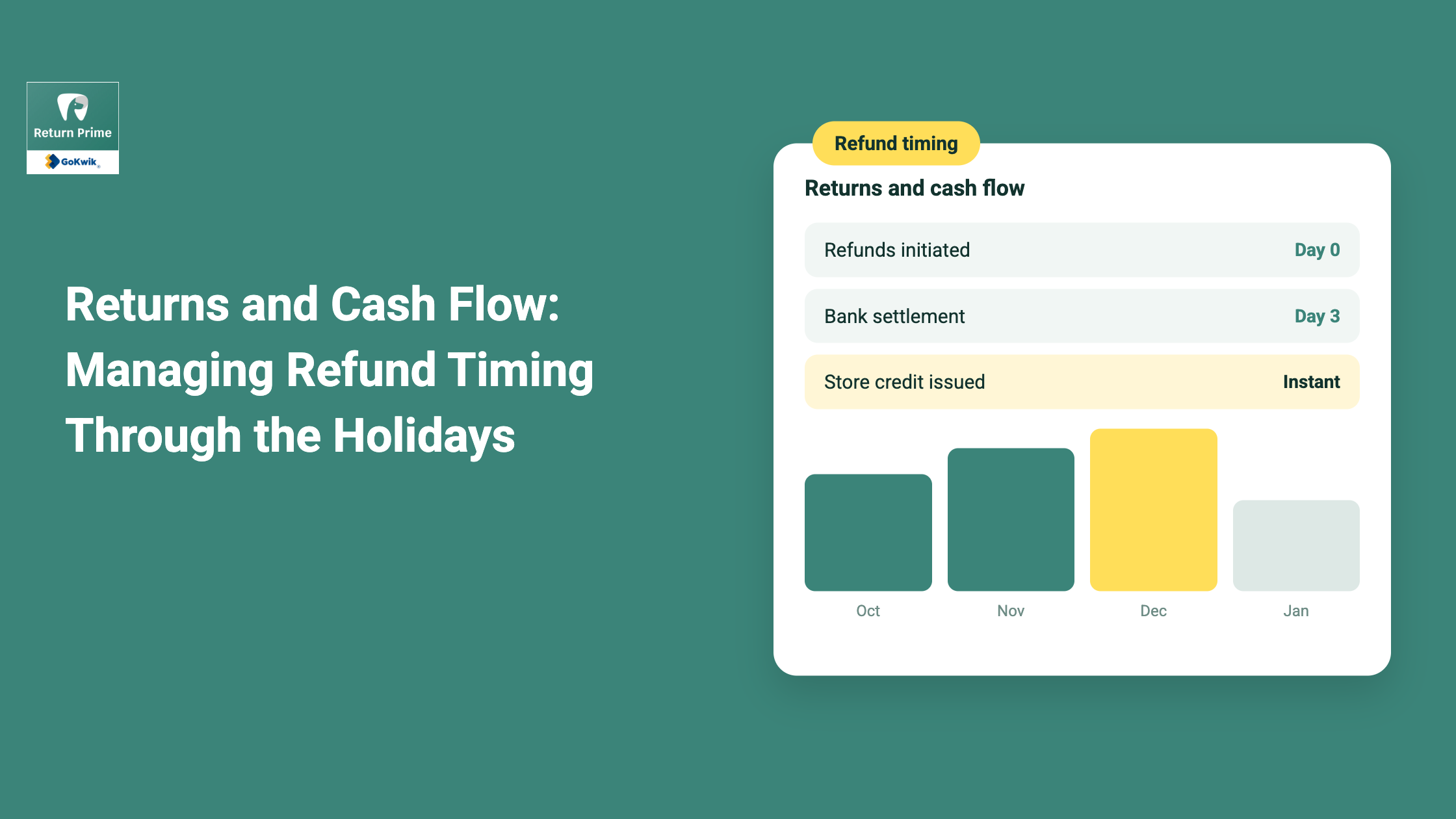
Coordinate refund timing with your finance team around the fiscal year-end specifically. Our guide on managing refund timing and cash flow through the holidays covers this in more depth, but year-end clearance adds an extra layer worth flagging to whoever closes your books.
Push store credit over cash refund where policy allows, specifically for this inventory. Since the underlying product won't be restocked, converting a clearance return into store credit that gets spent on your ongoing catalog is a better outcome than a cash refund with no offsetting future purchase.
How this differs from your standard holiday gift-return handling
Standard Christmas gift returns, on regular catalog items, should generally follow your normal generous, exchange-first approach, since that inventory gets restocked and resold normally. Year-end clearance returns, on inventory you're specifically trying to exit, warrant a distinct, more restrictive lens applied specifically to that tagged inventory, not your holiday gifting policy broadly.
What good year-end clearance handling looks like
A merchant that tags clearance inventory distinctly, applies genuinely different policy terms to it (final sale or store-credit-only, clearly communicated), keeps standard gift-return policy generous and exchange-first for regular catalog items, and coordinates refund timing with finance specifically around the fiscal year-end cutoff.
How Return Prime supports this
Return Prime's SKU and collection-level policy configuration lets year-end clearance inventory run under distinctly more restrictive terms than your standard catalog automatically, while Wonder Promotions handles the store-credit-over-refund incentive specifically for this tagged inventory.
Install Return Prime from the Shopify App Store to manage year-end clearance sales and return terms from your standard catalog.
FAQs
Should all year-end clearance items be final sale?
Not necessarily all, but consider it deliberately for discontinued lines you won't restock, where the negative restocking economics are clearest.
Does this policy apply to gifts purchased during clearance too?
The gift-return mechanics (recipient access, exchange-first default) still apply, but the underlying policy terms (final sale, store credit only) can still reflect the clearance-specific economics even for gifted items.
Why does refund timing matter more at year-end specifically?
Refunds processed right at the fiscal year boundary can land in different accounting periods, which matters more for year-end financial close than during a typical mid-year return.
Is this different from a regular EOSS sale?
Related, but year-end clearance specifically overlaps with gift-buying season and fiscal year-end timing in ways a mid-year EOSS event doesn't.





.svg)


.svg)