Dussehra Sale Returns: A Guide for Indian Shopify Brands

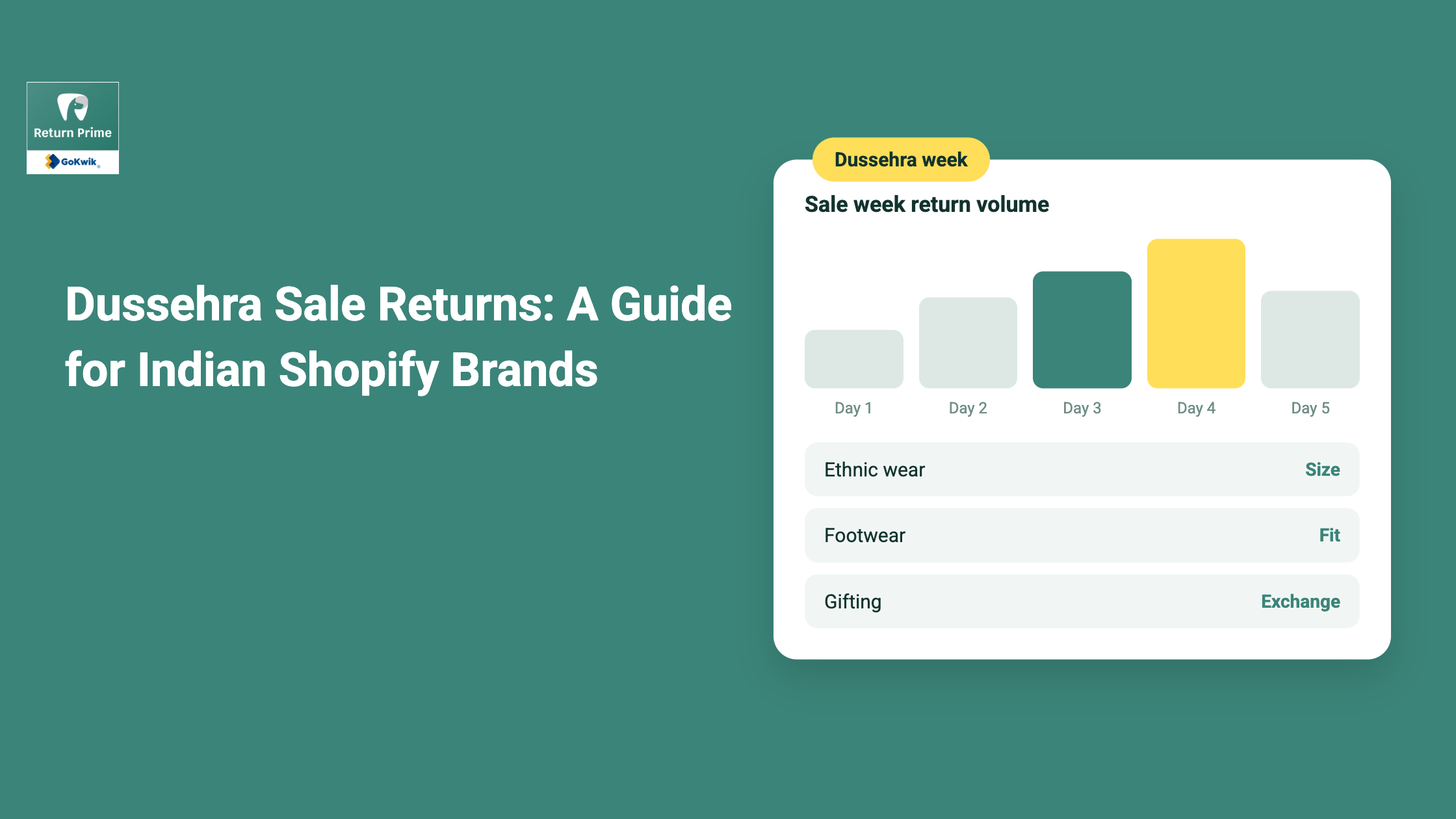
Dussehra 2026 falls on October 20, at the tail end of Navratri, and functions as India's opening bell for the festive selling season, the moment that kicks off roughly three weeks of continuous, escalating sales activity running straight into Dhanteras and Diwali. It's also, distinctly, considered an auspicious day for big-ticket purchases, gold, vehicles, electronics, home appliances, which gives it a different return profile than a typical mid-month sale.
Why Dussehra purchases behave differently
It's an "auspicious day" purchase occasion, not a discount-driven one. Consumers buying on Dussehra are often motivated by the cultural significance of the timing itself, not purely chasing a deal, similar in spirit to Dhanteras but for a slightly broader set of categories. This tends to mean more considered, planned purchases rather than pure impulse buys, which generally correlates with somewhat lower return rates than a flash-sale-driven event, though not zero.
It's the true start of a multi-week festive run, not an isolated event. Because Dussehra sits at the front of the same continuous festive stretch that runs through Dhanteras and Diwali, your returns operation needs to be ready this early, not just for the main event in early November. A returns process that isn't set up until Diwali week is already three weeks behind the actual order volume.
Electronics and home appliances feature more heavily than in a typical Diwali gifting mix. Given the specific auspicious-purchase association with electronics and appliances on this date, expect a different return-reason mix than the apparel and jewelry-heavy pattern more typical of the main Diwali gifting window, more defect and functionality-related returns, fewer sizing and preference mismatches.
What to prepare before October 20
Get your return policy visibility and structural readiness live before Dussehra, not just before Dhanteras or Diwali. Since this is genuinely the start of the sales surge, treat it as your actual readiness deadline, not a warm-up you can still be configuring during.
Prepare for electronics and appliance-specific return handling. Defect verification, warranty coordination with manufacturers, and clear policy language on these categories matter more here than for apparel-heavy sales events. Our footwear and electronics-specific solution covers category-specific configuration for exactly this kind of merchandise.
Set expectations for a long, continuous season, not a single spike. Given Dussehra leads directly into Dhanteras and Diwali with no meaningful gap, plan staffing and automation for a sustained three-to-four-week elevated period, not a single event followed by a return to baseline.
How this connects to the rest of your festive calendar
Dussehra is the opening move in the same sequence covered across our Dhanteras readiness guide and Diwali sales guide, and given the later Diwali date in 2026 (November 8, roughly three weeks later than 2025 due to the Hindu calendar's leap month this year), the full festive run extends longer than merchants may be used to planning for.
What good Dussehra-to-Diwali readiness looks like
A merchant that has return policy visibility, category-specific handling for electronics, and automation rules already live by mid-October, rather than treating Dussehra as a smaller warm-up event to configure things for later. The returns infrastructure needed for Dussehra is the same infrastructure that needs to hold through the entire festive run, so building it once, early, is more efficient than iterating separately for each individual festival.
How Return Prime supports this
Return Prime's policy configuration and Wonder Bot Automation can be set up once for the full festive season rather than reconfigured event by event, with category-specific rules for electronics and appliances running alongside your general apparel and jewelry policies from the same dashboard.
FAQs
Is Dussehra return volume as high as Diwali's?
Generally lower in absolute terms, but it marks the start of a sustained elevated period rather than a standalone spike, which is the more important planning consideration.
Should my Dussehra return policy differ from my Diwali policy?
The underlying infrastructure should be the same, though category mix (more electronics and appliances around Dussehra specifically) may warrant different emphasis in your policy communication.
Does the auspicious-purchase motivation actually reduce returns?
Reasoning from general ecommerce behavior, planned, considered purchases tend to have lower return rates than impulse-driven ones, though this isn't a guarantee and doesn't eliminate defect-driven returns on electronics specifically.
Install Return Prime from the Shopify App Store to get your returns infrastructure ready for the full Dussehra-through-Diwali festive run, not just the main event.





.svg)


.svg)