10 Return Policy Examples From Top Shopify Brands (And What You Can Learn From Each)

The fastest way to improve your return policy is to look at what brands doing it well have already figured out. Take the bits that apply to your business and scale!
Here are 10 real return policies from brands most Shopify merchants know. We’ve broken down what the policy actually says, what they got right, what the limitation is and a takeaway you can apply to your own store.
Note: Every policy detail below is pulled directly from each brand's official returns page or help centre. Nothing paraphrased from secondary sources for the policy specifics.
1. Bombas - The "Happiness Guarantee"
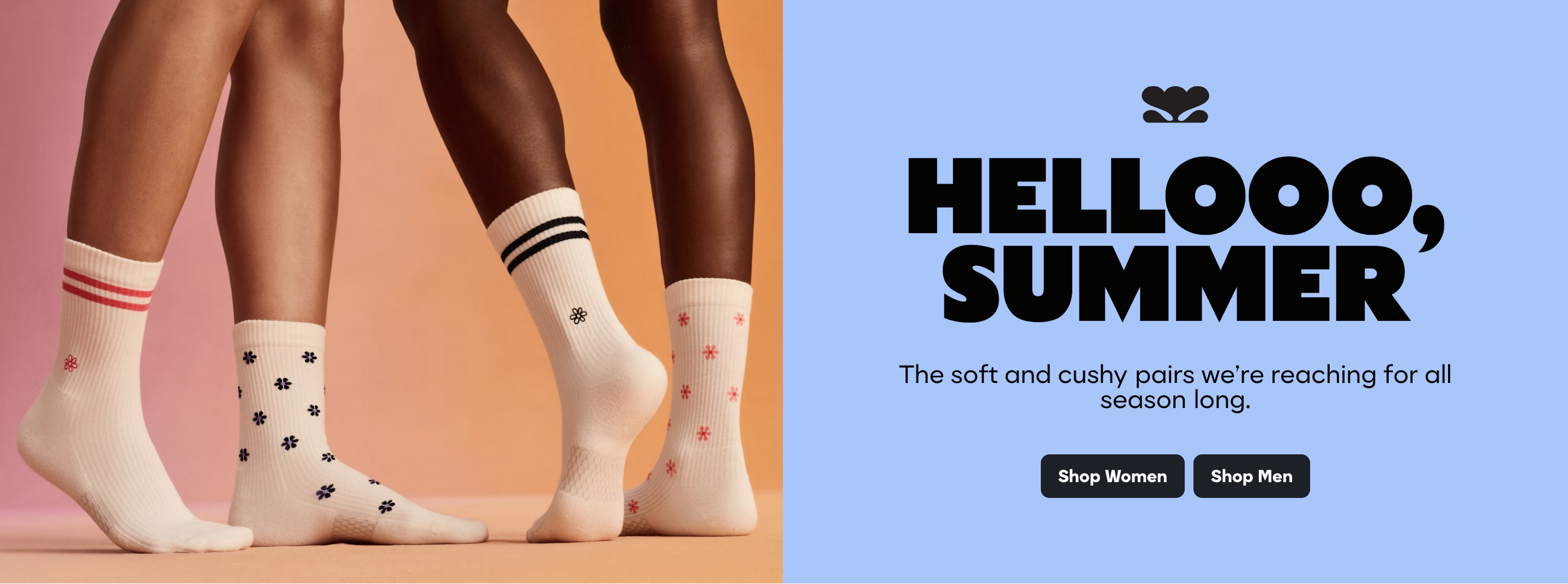
The policy: Bombas operates what they call a Happiness Guarantee. Refunds are available within 30 days of purchase (60 days for November-December purchases). After that window, customers can still get a free exchange, replacement, or store credit with no time limit. If your dog chews up your socks, they'll replace them. If the product develops a hole, they'll replace it. There is no defined end to coverage (Bombas Happiness Guarantee).
What they got right: The policy is named, branded, and emotionally compelling - "Happiness Guarantee" signals intent before a customer reads a single word of the fine print. The tiered structure is smart: you get a cash refund within 30 days (the customer-service-intensive window), and lifetime coverage beyond that via exchange or store credit. It's generous without being operationally ruinous, because lifetime coverage defaults to product replacement rather than cash refund.
What to steal: Name your policy. "30-Day Return Window" is forgettable. "Our Guarantee" or "[Brand] Promise" is a brand asset. Beyond the name, consider the tiered structure: standard cash refund within your normal window, exchange or store credit available for longer. It increases perceived generosity without proportionally increasing refund cost.
2. Patagonia - The Ironclad Guarantee

The policy: Patagonia guarantees everything they make. If a product fails to perform or has a defect - regardless of when it was purchased - they will repair, replace, or refund it. Standard returns (change of mind, unworn items) follow a shorter window. For performance or quality failures, there is no time limit. Worn Wear, their resale programme, lets customers trade in used gear for credit (Patagonia Ironclad Guarantee).
What they got right: The Ironclad Guarantee separates two distinct customer needs: the standard return (didn't like it, wrong size, changed mind) and the quality return (product failed to perform). Most brands apply a single policy to both, which either leaves quality-issue customers without recourse or creates abuse potential on standard returns. Patagonia's separation means the generous coverage is specifically for performance failures - which is where it builds the most trust.
The Worn Wear trade-in programme is an additional tool: instead of discarding or hoarding a product they no longer use, customers can trade it for store credit. This drives repeat purchase and reduces waste simultaneously.
What to steal: Write two separate policies into your returns page: one for change-of-mind/standard returns (your normal window and conditions), and one for product quality or performance issues (more generous, case-by-case). Most brands fold these together, which creates vagueness. Separating them makes both policies clearer and signals product confidence.
3. True Classic - 100-Day Window with Free In-Person Returns

The policy: True Classic offers a 100-day return and exchange window on all non-final-sale items. Items must be unworn, unwashed, and unaltered. US returns are free. Customers can either drop off at 500+ Return Bar locations (no box or label required) or use a prepaid shipping label (True Classic Partners page). Exchanges are handled with a "swap for anything in the shop" option - the return credit can be applied to any product, not just the same item.
What they got right: Three things work here simultaneously. The 100-day window removes purchase anxiety more than any 30-day window does - it's psychologically in a different category ("I have months, not weeks"). The box-free drop-off option removes the single biggest friction in mail returns: finding a box, printing a label, and getting to a carrier. And the "exchange for anything" approach means a customer who received the wrong size can reroute their return value toward any item in the catalogue, not just a replacement - which increases average exchange value.
Kwik Note: 100-day windows and free returns are sustainable for True Classic because of their apparel category and volume. For smaller brands or those with higher-cost items, the economics need careful modelling before replication.
What to steal: If you can't do 100 days sitewide, test it on your best-selling or highest-returning category. The box-free drop-off option depends on carrier partnerships like Return Prime.
4. Fashion Nova - Store Credit Only
The policy: Fashion Nova does not issue cash refunds for standard returns. All eligible returns result in store credit issued as a gift card (never expires). The return window is 30 days from delivery. A return shipping fee of approximately $4.99 is deducted from the store credit balance. The only exceptions to the store-credit rule are orders cancelled by Fashion Nova, or items received damaged, defective, or incorrect - those receive a refund to the original payment method (Fashion Nova).
What they got right: Store-credit-only is not customer-friendly in isolation, but Fashion Nova has made it work because of the volume and frequency of their customer purchases. Their customer base buys often; store credit with no expiry is a functional currency for that buyer. By keeping all return value inside their ecosystem, they retain revenue that would otherwise leave. Fashion Nova also removed friction from the credit: the gift card arrives by email, never expires, and can be used on anything including sale items.
What to steal: Not the policy itself - store-credit-only works poorly for brands without repeat-purchase frequency. But the mechanics are worth borrowing for a specific use case: offer store credit at a bonus value as an incentive alongside the standard refund. A meaningful chunk of customers will choose the credit, especially if your catalogue is broad enough that the credit feels genuinely useful. The never-expires detail matters. Store credit with an expiry creates resentment.
5. Gymshark - Clear Exceptions
The policy: 30-day return window from delivery for online orders, from purchase date for in-store. Items must be unworn, unwashed, with the care label intact (swing tag removal is fine). Exceptions: underwear and swimwear are non-returnable for hygiene reasons, personalized items cannot be returned, in the US and Canada, items at 60%+ discount are final sale. Returns registered separately must be shipped separately, even within the same order (Gymshark Returns Policy).
What they got right: The policy is structured so the core terms (30 days, original condition) come first, and exceptions are listed clearly below. This is the correct order - most policies lead with exceptions and caveats, which signals friction before a customer even knows the basic terms. Gymshark also specifies the swing tag vs care label distinction explicitly: swing tag can be removed, care label cannot. That level of specificity reduces customer disputes significantly - no ambiguity about what "original condition" means.
What to steal: Audit the structure of your returns page. Are exceptions leading or trailing? If your page starts with "the following items are not eligible for return," rewrite it so the standard, generous terms come first and exceptions follow. Also follow Gymshark's lead on specificity: if your condition requirement is "original condition," define what that actually means in your context. "Tags attached" or "tags attached, excluding the swing tag" are very different things and both should be spelled out.
6. Allbirds - "Try Them Outside" and Transparent Resale Handling
The policy: Allbirds offers a 30-day trial period. Customers can return or exchange shoes for free, no questions asked, even if worn outside. The one condition is that refunds must be requested in the same country as the original purchase. Socks must be unopened. All other accessories are final sale. For returned worn shoes: Allbirds never resells them. They donate worn shoes to Soles4Souls for distribution to people in need (Allbirds return policy).
What they got right: "Even if you've worn them out in the wild" directly removes the single biggest anxiety in buying footwear online: what if I wear them and they don't feel right? The framing as a "30-day trial" rather than a "return window" reframes the entire purchase decision - you're not buying shoes, you're trialling them. The donation detail is genuine and verifiable, which gives it credibility. It also tells customers their return isn't wasteful - it goes somewhere useful.
What to steal: If you're in a category where "try before you fully commit" is meaningful - footwear, outerwear, anything where real-world use matters - explicitly give customers permission to try the product in use conditions before returning. "Wear it on one run, if it doesn't work for you, return it" is a more compelling policy for a running shoe than "unworn with tags attached." It reduces hesitation at purchase in exchange for a small increase in return openness. Also consider: if returned items are donated, say so. It changes the emotional calculation for customers who hesitate to return out of guilt.
7. SKIMS - Loyalty Tier That Waives the Return Fee
The policy: SKIMS has a 30-day return window from order date (not delivery date - an important distinction). Standard mail returns incur a $6 return shipping fee deducted from the refund. This fee is waived in three cases: SKIMS Rewards members, returns converted to store credit, and in-person returns at retail locations. Final sale items are not eligible for return. During holiday season, orders placed October 30-December 30 are eligible for an extended return period through January 31 (SKIMS return policy via Skimrs.it.com).
What they got right: The fee waiver for Rewards members is a smart loyalty mechanic - it turns a cost centre (returns) into a loyalty incentive. A customer who might not join a rewards programme for discount points alone might join specifically to avoid return friction. The store credit waiver is also a good nudge: customers who are on the fence about cash vs. credit will see "store credit = free return" as a tangible benefit and convert at higher rates.
What to steal: The loyalty-tier return fee waiver is one of the most practical and scalable tactics here. If you currently charge for return shipping: waive it for loyalty members. If you don't have a loyalty programme: use it as a founding benefit. The mechanic works because it makes the return fee visible as a cost, and loyalty membership as the solution - it's more motivating than a discount points programme for many customers.
Do not steal: the order-date window. Always measure your return window from the delivery date, not the order date. Multiple customer complaints online centre specifically on this.
8. Chubbies - 90 Days, Free, No Box Required
The policy: Chubbies offers free returns and exchanges within 90 days of purchase. Items must be in original, unworn condition with tags attached. The process requires only an order number and zip code to initiate, and a prepaid USPS return label is provided. Clearance items are final sale. Holiday gift purchases have an extended return window (Chubbies return policy).
What they got right: 90 days plus free returns is a confident policy for a brand that knows its customer - men buying casual shorts who are likely to buy multiple items and return what doesn't fit. The process is low-friction by design: order number and zip code only, no account login, no email matching, no questions. This makes the return feel fast and trusted.
What to steal: The initiation simplicity. Order number and zip code is the minimum viable data to start a return. Most return portals ask for more than this - order number, email, reason code, photos - before the customer even knows whether they qualify. Reduce initiation friction to the minimum and add questions only at the point they're actually needed for the process (e.g., reason codes for routing, photos for defect claims only).
9. Warby Parker - The Try-On as a Pre-Return Mechanism
The policy: Warby Parker's standard return policy offers a 30-day window for frames to be returned or exchanged, free of charge. The brand was also known for its Home Try-On programme. They sent five frames to customers' homes for free, with five days to try them before deciding. This was discontinued by the end of 2025 as they expanded their physical stores to over 300 locations and invested in virtual try-on technology (Retail Dive).
What they got right: The Home Try-On programme was a structural answer to the fundamental problem of buying eyewear online: you cannot know how frames look on your face from a photo. Rather than accepting high return rates and processing them efficiently, Warby Parker moved the try-on experience to before the purchase. The result was lower post-purchase returns on frames that customers had already tried physically. It also built brand relationships - getting five frames in a branded box was a memorable experience that no competitor could match.
What to steal: The principle, not the exact mechanism. Ask: where in your category does purchase uncertainty come from? For eyewear it was "will this look right on my face." For your category it might be sizing, colour accuracy, material feel, or scale. A try-before-you-decide mechanism - whether physical samples, virtual try-on, AR, detailed video reviews, or a sample SKU - that moves uncertainty to before the purchase reduces post-purchase returns more effectively than any return policy refinement after the fact.
10. Cuts Clothing - The Trade-Off Between Short Window and Brand Positioning
The policy: Cuts Clothing accepts returns and exchanges within 20 days of delivery for unworn, unwashed items with tags attached. All items must be returned in the original barcoded black bag. Accessories are final sale. Shipping costs are non-refundable. Refunds are issued to the original payment method only (Cuts Clothing Terms of Use).
What they got right: Cuts is a premium men's workwear brand. Their 20-day window is short compared to peers, but it's consistent with their positioning: deliberate, premium buyers who know what they want. The original black bag return requirement creates a tactile, on-brand return experience - the bag is part of the product packaging, and requiring it back signals that returns are taken seriously.
What to steal: The branded packaging return requirement is an under-used tactic. Requiring customers to return items in the original branded bag or box (which they almost always still have, if the return is within the window) creates a consistent unboxing experience in reverse - it reduces damage in transit and keeps the return experience on-brand. More importantly: if your return window is short, your support response time has to be faster. A 20-day window with a 48-hour support response time gives customers very little margin for error if they encounter a problem. Short window = fast support, not slower.
What are the Common Patterns Across All 10 Return Policies?
A few consistent patterns emerge from the brands that handle returns well:
- They name their policy.
Bombas has the Happiness Guarantee. Patagonia has the Ironclad Guarantee. True Classic has the Perfect Fit, Made to Last Guarantee. A named policy is a brand asset. An unnamed policy is just fine print.
- They separate change-of-mind from quality/performance returns.
Patagonia, Bombas, and Allbirds all operate different tiers for these two distinct customer needs. Most brands conflate them, which either underserves quality-issue customers or creates abuse on standard returns.
- They use the return policy as a loyalty mechanic.
SKIMS waives the return fee for Rewards members. Bombas extends their holiday window. True Classic's 100 days is itself a trust-builder that drives first purchase. The return policy is not just damage control - it's a conversion and retention tool.
- They make initiation fast.
Order number and a second identifier (zip code, email) is the ceiling for friction at initiation. Every additional step - photos, reason codes, account login - should have a clear purpose, not exist for the brand's operational convenience.
- They measure from delivery date, not order date.
SKIMS is the notable exception and gets consistent criticism for it. Every other brand on this list uses delivery date as the start of the window.
How to Apply This to Your Store
You don't need to copy any single policy here. The question is which elements map to your specific situation:
- High product confidence and repeat buyers: Consider a named guarantee with extended or tiered coverage (Bombas, Patagonia model)
- High purchase anxiety category (fit, colour, how it feels): Give customers explicit permission to try the product in real conditions before returning (Allbirds model), or build a pre-purchase try-on mechanism (Warby Parker principle)
- Want to drive loyalty programme sign-ups: Waive return fees for members (SKIMS model)
- Long window is part of your brand promise: Make it very long and very visible (True Classic, Chubbies model)
- Store-credit strategy: Offer a bonus incentive on store credit rather than a store-credit-only policy (Fashion Nova model, adapted)
- Premium positioning: Add specificity and structure to your policy language so it signals quality rather than restriction (Gymshark, Cuts model)
The policy you end up with should reflect your category, your customer, your margins, and your product confidence.
While you focus on ironing out the policy, install Return Prime for free to handle the rest of your return flows.
Install Return Prime today to handle your returns flow seamlessly.
Frequently Asked Questions (FAQs)
1. What makes a return policy actually increase conversion on a Shopify store?
A return policy increases conversion when it removes the specific anxiety that is preventing purchase, and that anxiety is almost always about what happens if the product does not work out. The most effective structural move is putting your most reassuring terms first: the return window, whether returns are free, and what the customer gets back. Exceptions and conditions come after. The policy that converts is the one that answers "what if it doesn't work?" before the customer has to ask.
2. Should a Shopify return policy be the same for all products, or different by category?
Different by category is nearly always the right structure, even if the differences are small. Hygiene-sensitive categories like underwear and swimwear require an exception regardless of how generous your general policy is, Gymshark handles this clearly without making it feel punitive by placing it after the standard terms rather than leading with it. High-purchase-anxiety categories like footwear benefit from explicitly broader conditions, as Allbirds demonstrates by allowing outdoor trial use. Final sale items need their own clearly flagged terms. Personalised or custom products need a separate clause. The brands that generate the fewest disputes are the ones whose policy is specific enough that customers know exactly which terms apply to their situation before they buy, not after.
3. How do top brands handle the difference between a standard return and a defective product return?
The strongest policies separate these two scenarios explicitly with different terms for each. Patagonia's Ironclad Guarantee is the clearest example: standard returns for change of mind follow a normal window and conditions, while quality or performance failures have no time limit and are handled case by case. Most Shopify brands fold both under a single policy, which creates two problems, quality-issue customers feel underserved when their defective product is treated the same as a change-of-mind return, and the vague language generates disputes because customers interpret "defective" and "original condition" differently. Writing two separate sections on your returns page, one for standard returns and one for quality issues, eliminates both problems and signals genuine product confidence.
4. What return policy tactics work specifically for high-purchase-anxiety product categories?
For categories where customers cannot fully evaluate the product before buying footwear, outerwear, eyewear, anything where fit or real-world feel matters, the most effective tactic is explicitly giving customers permission to try the product in use conditions before returning. Allbirds does this directly: "even if you've worn them out in the wild." Warby Parker built an entire pre-purchase try-on programme around the same insight before expanding physical retail. For Shopify brands that cannot offer a physical try-on, the policy equivalent is naming the use condition explicitly: "wear it on one run, if it doesn't feel right, return it." This reduces purchase hesitation more effectively than any extension of a standard return window, because it removes the specific uncertainty that was preventing commitment.
5. How should a Shopify brand structure its return policy page for maximum clarity?
Start with the most reassuring terms: your return window, whether returns are free, and what resolutions are available: refund, exchange, or store credit. These should be readable in under 20 seconds for a customer scanning the page before purchase. Exceptions: hygiene items, final sale, personalised products, follow in a clearly labelled section below. Condition requirements like unworn and tags attached should be defined specifically, not vaguely: Gymshark specifies that swing tags can be removed but care labels cannot, which eliminates a whole category of condition disputes. The return initiation process should be its own section, short and step-by-step, with the minimum information required to start, order number and one identifier is the ceiling for friction at that stage. If your policy has a named guarantee, lead with that name before the detail. A named policy is a brand asset. Unnamed fine print is just fine print.





.svg)


.svg)